How can you live with different traditions and beliefs as a couple?
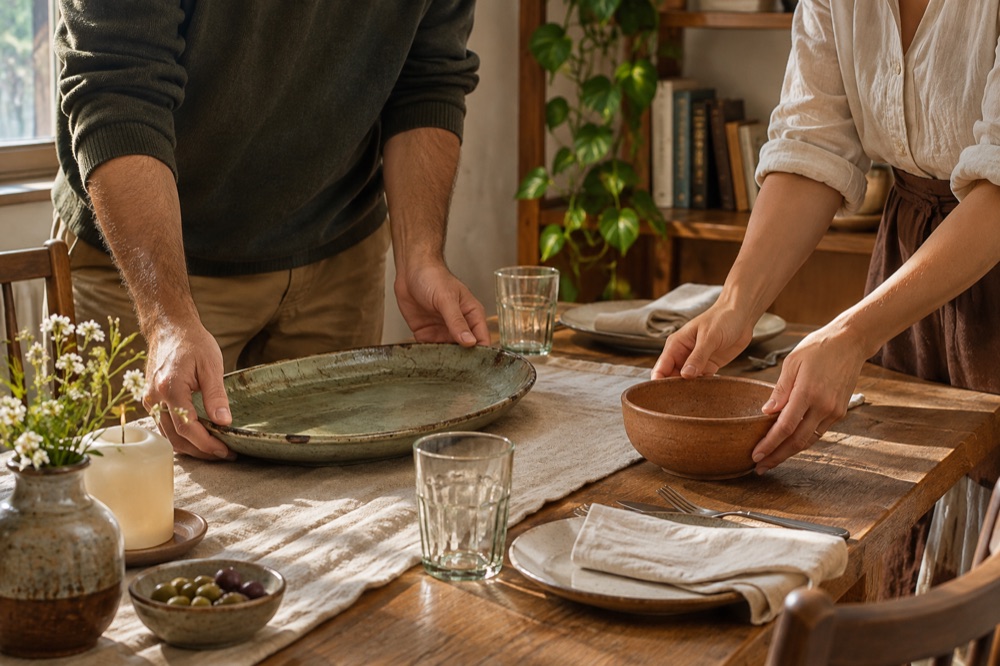
Traditions and beliefs shape our identities deeply, sometimes even unconsciously. As we grow up, we inherit the practices, values and rituals of our families. We often think of escaping or transforming them, but it happens that, within the framework of a couple, they reappear, especially during the major stages of life: marriage, birth, child-rearing.
In these moments, it is essential to ask yourself questions:
-
What place do we give to our personal traditions?
-
How much do we understand our partner's?
-
Do we know how to integrate them without conflict into our common life?
Traditions: legacy or burden?
Traditions are neither good nor bad. They are cultural tools transmitted from generation to generation. But when they are not discussed or understood, they can become obstacles in a couple.
As Pierre Bourdieu explains, our habitus – these inherited patterns of behaviour – influence our choices almost automatically. These habits can lead to misunderstandings, because they often rely on implicit expectations: "It's obvious, isn't it? Everyone does this." But what seems obvious to one person can be totally alien to the other.
Eden and Denis
Eden and Denis, after three years of living together, got married and rejoiced at their religious differences: Eden, of Jewish origin, and Denis, a Christian, found it enriching and fun to celebrate the feasts of both cultures. But when their child was born, everything changed.
-
Name: Eden's parents wanted a Jewish name, while Denis' parents insisted on honouring a paternal grandfather. They tried to satisfy everyone by choosing "Leo", but this decision left frustrations on both sides.
-
Circumcision or Baptism: Although they are not religious, each one instinctively leaned towards his own traditions. Their decision to do nothing caused tensions in their respective families.
In therapy, Eden and Denis relearned to see their differences as a wealth and to build a common framework for their children.
Clara and Julien
Clara and Julien formed a loving couple, but their differences in family traditions began to create tensions. Clara came from a family very attached to Sunday lunches, an immutable ritual to which her parents held a great deal. Julien had grown up in a more independent family, where everyone organized their weekends freely.
After a few months of fighting over these Dominican meals, Clara felt misunderstood and rejected, while Julien found these obligations stifling. They finally decided, by working together, to alternate between family weekends with Clara and freer Sundays for Julien. This compromise allowed them to find a balance respecting Clara's attachment and Julien's need for freedom.
Create traditions that feel like yours
If you’re unsure which rituals to keep or pass on, we can talk about what matters to each of you and what you’d be comfortable adapting.
The psychological impact of implicit traditions
Traditions, when not discussed, can:
-
Enhancing Insecurity: Partners may feel rejected or misunderstood if their traditions are not respected.
-
Creating identity conflicts: Whether or not to adhere to a tradition can become a source of internal or external tension.
According to John Bowlby, conflicts around traditions can reactivate attachment wounds. For example, a partner who feels compelled to give up their beliefs may feel this as a rejection of his family or identity.
Practical practices for harmonizing beliefs and traditions
-
Identify your personal traditions: Think about your own beliefs and traditions.What practices do you care about?What values do you want to convey to your children?
-
Ask your partner open questions:
-
"What is important to you in your traditions?"
-
"How can I support you in their maintenance?"
-
-
Imagine common solutions: Discuss concrete scenarios, such as:
-
What parties are you celebrating?
-
How to raise your children in a balanced environment?
-
-
Learn how to make compromises: If a tradition is essential for your partner, show him or her that you are willing to accept it. For example, by celebrating festivals of his or her traditions or by incorporating symbolic elements.
-
Be flexible: Traditions are not frozen. You can adapt them to reflect your couple reality.
Additional case studies
Marie and Antoine
Mary, an atheist, and Anthony, a practicing Catholic, disagreed with their child's religious education. After discussion, they decided to baptize their child while explaining to him, as soon as he was of age to understand, whether he would have the freedom to choose his faith or not.
Samir and Sophie
Samir, a non-practising Muslim, and Sophie, an agnostic, found a balance by celebrating both Christmas and Eid. They explained to their children that these festivals were opportunities for cultural sharing rather than religious obligations.
Conclusion: Love beyond tradition
Traditions are like roots. They anchor us, but they must not lock us in. By discussing your beliefs and expectations with your partner, you can transform your differences into strength.
"It is not by denying its roots that one rises up, but by transforming them to better adapt."—Simone de Beauvoir
Take time to explore your traditions. By understanding and adapting them together, you will build a relationship based on respect, balance and love.